What Makes Tapestry Different
A narrative-first system built for modular worlds, meaningful failure, and player-driven fate.
How it Plays
A quick loop you can run in any setting—combat, exploration, intrigue, or weird magic politics.
Set the scene
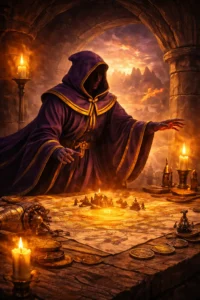
The Storyweaver paints the situation, not the solution. They describe what’s happening, what your character can reasonably see or know, and what pressure is in the air—time running out, danger closing in, tempers rising, resources thinning. They don’t hand you a menu of “correct options.” You decide what your character wants from this moment, and you act. The game’s job is simply to make the world respond honestly to that choice.
Example
The chapel is half-collapsed, candle smoke hanging low. A thread-snarled cultist drags a satchel toward the side door while two others sweep the pews with lantern light. If you move fast, you can catch him before he slips into the fog—if you move loud, you’ll draw the whole room. How do you approach?
Take action
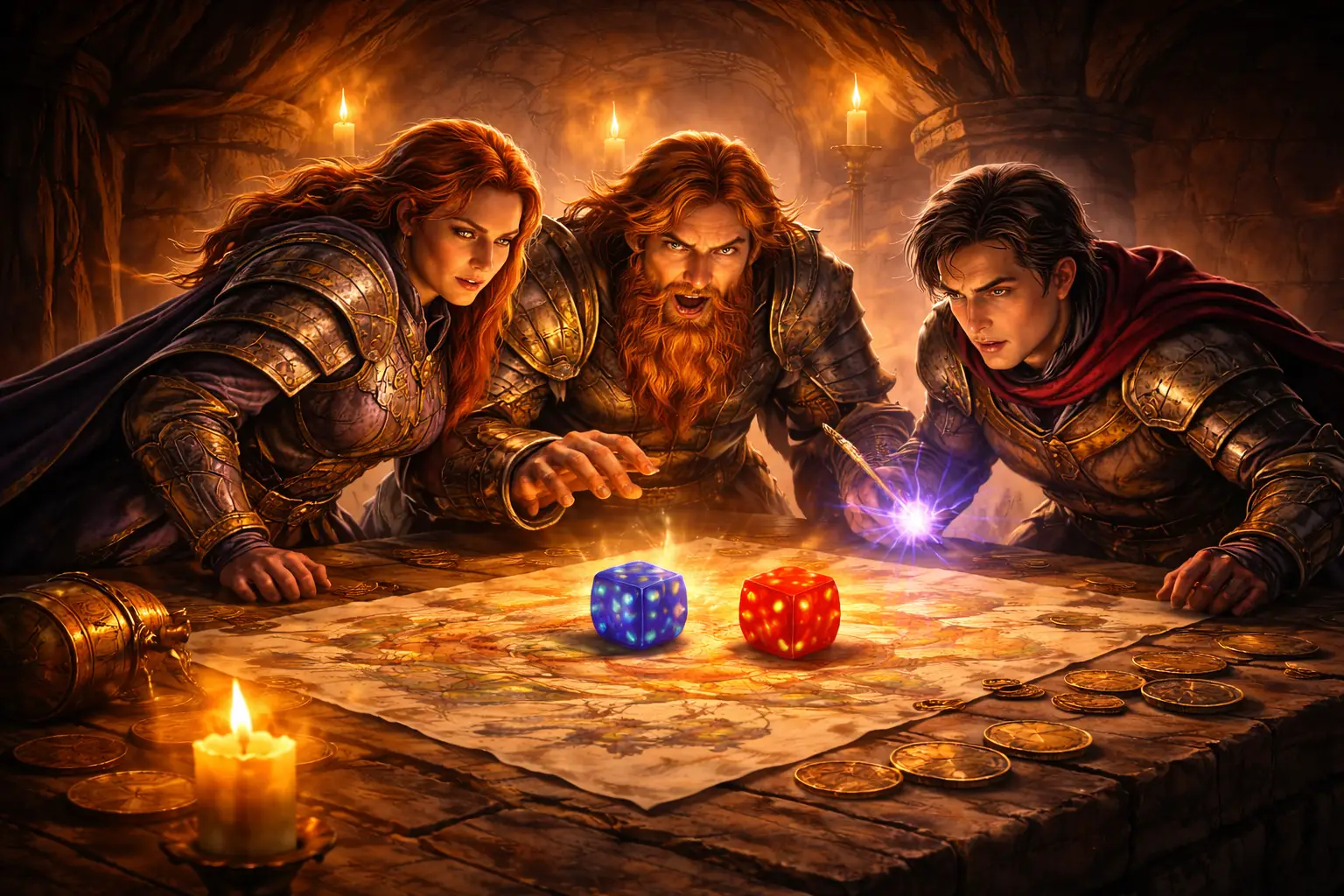
Players describe what they do and how they do it—bold, careful, clever, reckless, desperate. You roll only when the outcome is uncertain and the moment matters. Strong hits push the story forward cleanly; weak hits succeed with a twist, cost, or complication. The goal isn’t “did you win the roll,” it’s “what did your choice change?” The dice are there to create momentum and meaningful tradeoffs, not to stall play.
Example
- Say what you do and how you do it (Your approach).
- Roll 3d6 + Approach (+Any relevant skills)
- Strong Hit / Hit / Weak Hit/ Miss – Determines how cleanly it lands
Example: “I sprint up the fallen beam and shoulder-check the cultist before he hits the door.” — (Approach Might[Strength] or possibly Finesse[Agility])
Weave consequences
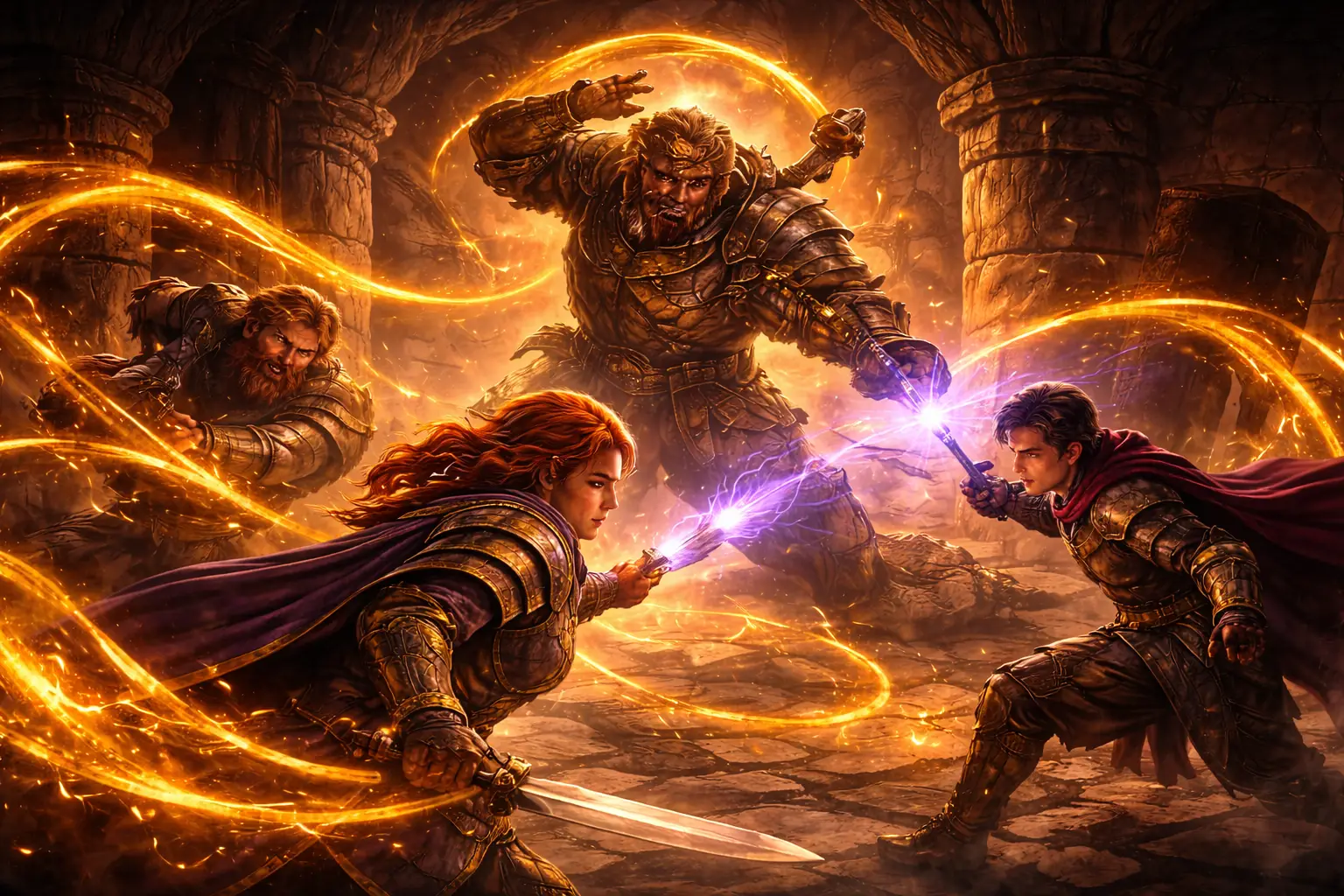
Every result leaves a mark. Success creates openings, shifts the situation, and moves you closer to what you want. Failure doesn’t stop the story—it adds pressure: new complications, worsened positions, hard choices, or escalating threats. When things get messy, you gain resources you can cash in later (Thread/Resolve) to bend fate—small nudges when you need an edge, or bigger moves when the moment demands something mythic. The table stays in motion because every roll makes the world different.
Example
- Strong Hit: You succeed with flourish; (The Storyweaver may grant you edge or additional benefits).
- Hit: you do it as stated
- Weak Hit: you do it, but pay a cost (Harm, Condition, lost time, worse position, hard choice).
- Miss: it goes wrong and the Storyweaver introduces a twist—plus you gain +1 Thread to spend later.
Example consequences:
“Strong Hit: you take him by surprise slamming into him with enough force that he’s Dazed, if combat ensues he will take Burden on his first attack roll”
“Hit: you slam him into the stone and the satchel drops—he’s pinned.”
“Weak Hit: you pin him, but the lantern swings—take ‘Exposed’ as the room notices you.”
“Miss: you lunge and the beam snaps—he slips free into the fog and the lantern tips, fire catching dry hymnals. Gain +1 Thread.”
Dials: Plug-in rules that tune the Story
A Dial is a modular rules packet that changes the feel of play—without changing the core engine. You keep the same characters and core rolls, but the Dial tweaks what failure costs, what resources flow, and what the table focuses on.
How Dials are used
- At the start of a campaign (or arc), the group picks a Dial.
- The Storyweaver sets a few dial “knobs” (usually 2–5 options).
- Those knobs stay consistent until you intentionally change them.
Example
A campaign that centers the story around love and romance would likely use the Love & Romance Dial. For this arc we’re using Slow Burn: relationship progress is tracked in beats, not one big roll. When you take a vulnerable step toward someone, success builds Bond; partial success builds Bond but adds a complication; failure creates distance and a new hook that pulls the story forward.
Get the Books
Grab the core files, print what you need, and start weaving.
COMMUNITY
Tapestry is growing and growing consistently! Come join us in our discord and follow for more updates and content
✦
✦
✦
✦

✦
✦
✦
✦
Playtest Coming Soon!
We’re getting ready to open the first public playtest of the Tapestry platform — a space built for collaborative storytelling, character creation, and play‑by‑post adventures.
During this early test, you’ll be able to:
- Build characters using the first version of the character creator
- Explore how Threads, Traits, and Abilities come together
- Try out the Games channel, where you can run or join play‑by‑post stories
- Experiment with tools designed to support Storyweavers and players alike
Your feedback will help us refine the interface, smooth out the flow, and shape how Tapestry grows. Join the Community in order to follow updates for when the Playtest opens!