Adversaries of the Tapestry
Tapestry isn’t married to one setting, so neither are its enemies. An adversary is a bundle of intent, pressure, and behavior you can reskin—dragons in one campaign, cyborg mercenaries in the next—without rewriting the rules.
What is an adversary?
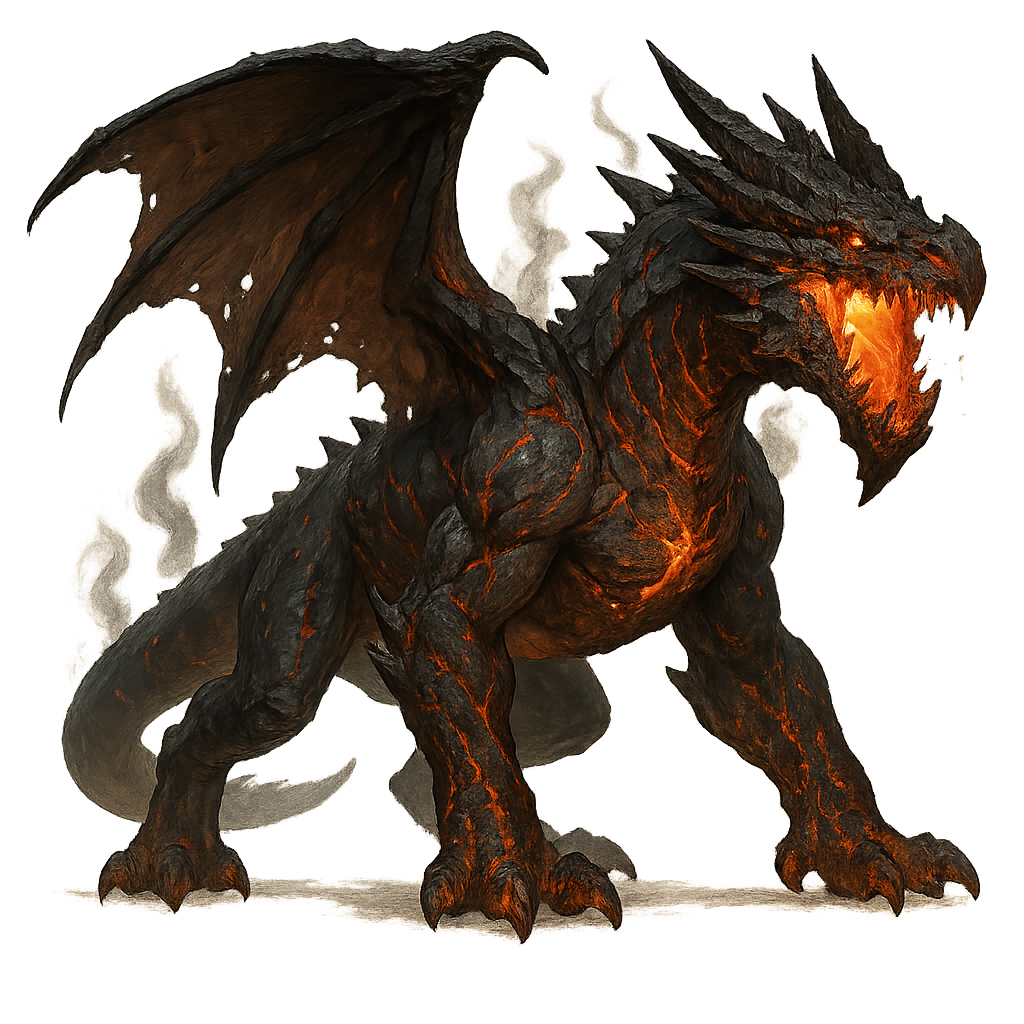
Fantasy Skin
- Name: (Tier IV • Bestiary • Hazardous/Brawler)
- A catastrophic, heat-wreathed drake built to bully the battlefield with raw destruction. Its presence creates fear, punishes melee, and scatters groups with shockwaves.
✦
Sci-Fi Skin
- Name: Project EMBERMAW: Plasma-Core Warbeast (Tier IV • Bestiary • Hazardous/Brawler)
- A bioengineered siege-beast with a glowing plasma core and scorched armor plating. It opens with a plasma cone, uses servo-claws to pin targets, vents superheated coolant when struck up close, and blasts shockwaves with thrusters to scatter squads.
Notice what we did: same table function, different fiction.
Pick threats that match the moment
Start with the scene’s pressure: chase, siege, negotiation, escape, survival, stealth. Then choose roles that intensify it. A brute makes space unsafe. A controller makes choices painful. A sniper turns exposure into danger. A swarm turns time into a problem.
- If the scene is about movement: Skirmishers + Controllers
- If the scene is about survival: Brutes + Supports
- If the scene is about stealth: Snipers + Scouts
- If the scene is about chaos: Swarms + Hazards
Craft your own in 60 seconds
- Pick a Tier (how scary is it?)
- An Unwoven one tier above the players is considered a major threat
- Pick a Role (how does it apply pressure?)
- Choose 2–3 signature moves (what does it do every time it matters?)
- Give it a want (what does it try to accomplish?)
- Paint the skin (dragon, cyborg, demon, mech, lawyer, storm—whatever fits)
What’s in the compendium right now
While the full bestiary appears in the Adversary Compendium, the adversaries you’ll encounter in Tapestry often fall into broad categories:
- Beasts of the Wild — Natural creatures twisted by magic or instinct.
- Constructed Horrors — Creations of lost civilizations or misguided ambition.
- Spirits and Echoes — Manifestations of memory, emotion, or forgotten stories.
- Cunning Foes — Intelligent adversaries with motives, goals, and agency.
Each adversary is built to support narrative-driven play, offering hooks, motivations, and story potential—not just stat blocks.
Join The Discord to get Access to the Compendium
The compendium and other resources are available directly in our discord for FREE! Come join the fun and help build new and interesting adversaries
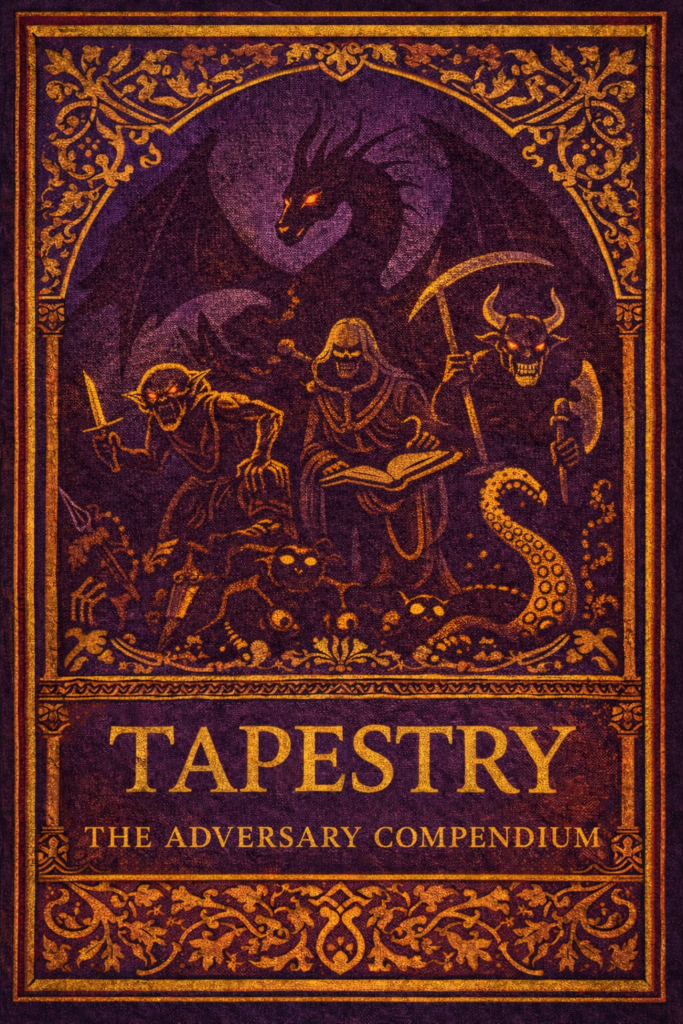
Adversary Compendium (PDF)
A modular bestiary built for any setting. Run threats fast, reskin them instantly, and keep the pressure on without rewriting stat blocks. Designed for story‑driven play, each adversary comes with hooks and behaviors that make encounters feel alive.
✦
✦
✦
✦