Carrion Lynx
A low, thick-muscled cat the size of a small pony, with tufted lynx ears and fur the mottled gray-brown of pine bark. Bone ridges push through its shoulders and spine like pale thorns. Its muzzle is too long, jaw hinged a little too wide, teeth layered and stained black. When it breathes, you hear a…
Signs & Omens
– A sudden battlefield stink in clean air: iron blood, cold ash, sour rot.
– A wet rattle or gurgling chuff in the dark, like a lung full of rainwater.
– Lynx-like pawprints… but too deep, too wide, and sometimes studded with pale grit like ground bone.
– Corpses and carcasses with black-stained bite marks and “layered” tearing, as if more teeth were involved than should exist.
– Scavenger birds circling but refusing to land—like something else has claim.
– Pale scratches on trees at shoulder height, with flecks of bone or chalky residue.
– A thin drift of flies even in cold weather, clustering where no rot should be.
– A sense of being “paced,” not chased—wounded targets feel it most.
Where You Might Encounter It
– Fresh battlefields, skirmish sites, or roadside ambush scenes—especially where bodies weren’t properly burned or buried.
– Old war roads and forgotten forts where “the ground remembers” violence.
– Plague pits, mass graves, collapsed field hospitals, or burned-out camps.
– Pine-bark forests and rocky ridgelines near carrion birds’ nesting grounds.
– Following an army, raiding band, mercenary company, or even a well-armed “hero party” that leaves a trail.
– Places where the dead won’t stay quiet (haunted barrows, wrongfully sanctified cemeteries, cursed execution sites).
Field Note
A low, thick-muscled cat the size of a small pony, with tufted lynx ears and fur the mottled gray-brown of pine bark. Bone ridges push through its shoulders and spine like pale thorns. Its muzzle is too long, jaw hinged a little too wide, teeth layered and stained black. When it breathes, you hear a wet rattle, and you can smell the battlefield on it.
I watched one take a wounded deserter without sprinting. It didn’t need speed. It simply chose the angle where the man’s limp would fail him and walked—patient as a funeral. When it bit, there was a sound like wet leather tearing and then the smell got worse, like the air itself had been buried and dug back up. Burn what it leaves. Burying isn’t enough. If it’s near, the ground will start to feel like it’s waiting.
– Typically encountered in pairs or trios. One circles wide while another tests the line.,
– If a lynx takes a hard hit (6+ Harm in one go) and no easy kill is on the ground, the whole pack is likely to withdraw, dragging a carcass or limb if they can.
Get full stats in the Adversary Compendium
- See Carrion Lynx and dozens more unique unwoven in the Adversary Compendium, a comprehensive PDF featuring all our custom creatures
- Complete stat blocks ready to use in your Tapestry games—no conversion needed
- Rich lore and tactics for each unwoven to help you bring them to life at the table
- Organized by tier and role for easy encounter building and campaign planning
- Instant digital download—get it today and start using these creatures in your next session
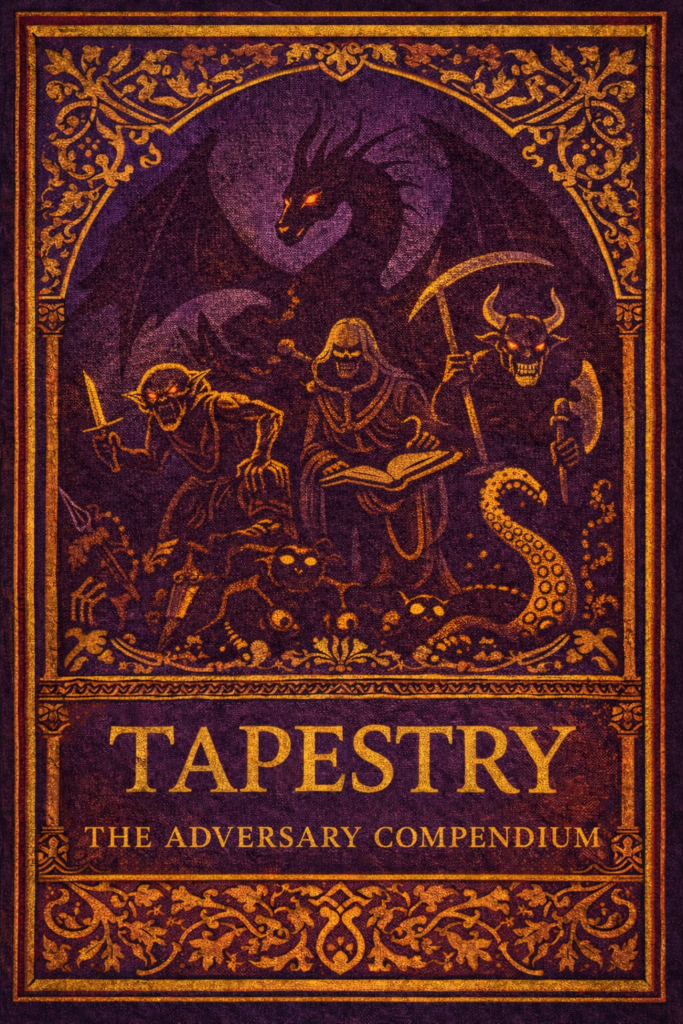
Adversary Compendium (PDF)
A modular bestiary built for any setting. Run threats fast, reskin them instantly, and keep the pressure on without rewriting stat blocks. Designed for story‑driven play, each adversary comes with hooks and behaviors that make encounters feel alive.
Original price was: $10.00.$5.00Current price is: $5.00.